
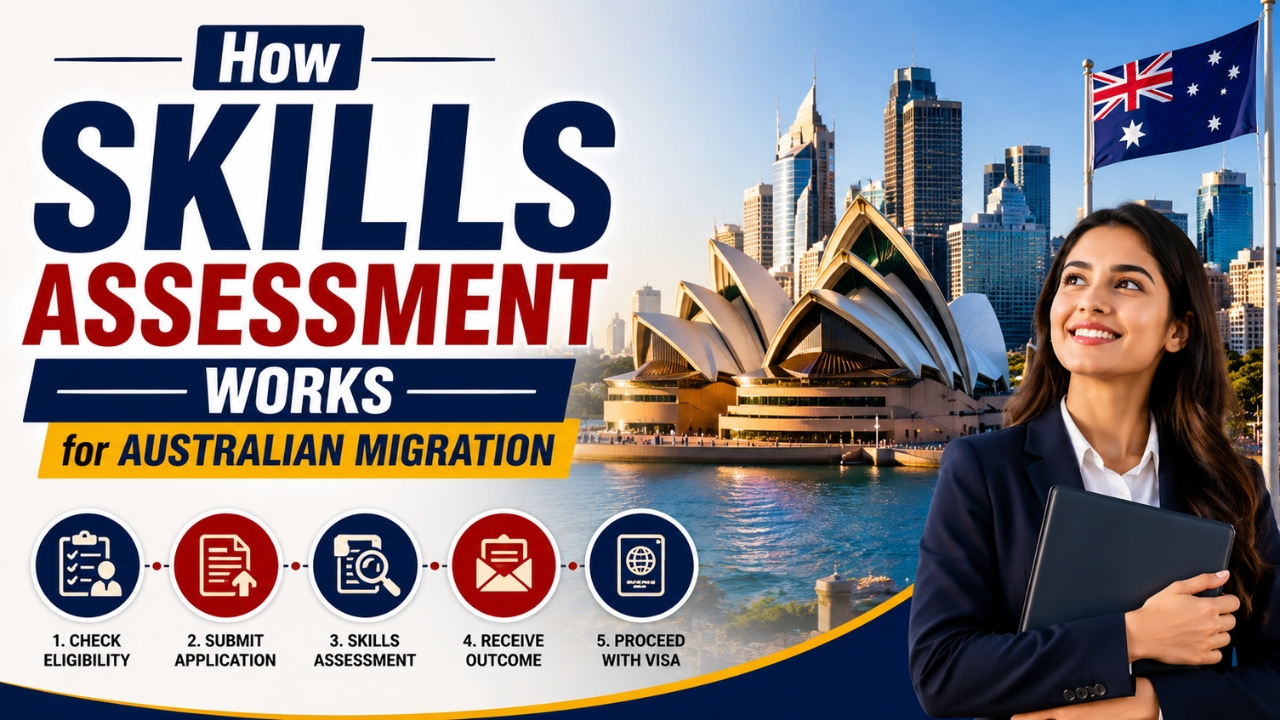
Australia remains one of the top destinations for skilled professionals looking to build a better future overseas. Strong career opportunities, quality lifestyle, global work exposure, and long-term migration pathways attract thousands of skilled workers every year. However, before applying for many skilled migration pathways, applicants often need to complete an important process known as Skills Assessment for Australian Migration.
Many applicants hear about skills assessment during migration planning but are unsure about what it means, why it matters, or how the process works. Understanding this step can help applicants prepare better and avoid delays during their migration journey.
If you are planning skilled migration to Australia, this guide explains everything you need to know about Skills Assessment for Australian Migration in simple and easy-to-understand language.
At Big Dream Education and Visa Services, we help applicants understand important migration requirements, including skills assessments, document preparation, and migration pathways, helping individuals move forward with greater clarity and confidence throughout their Australian migration journey.
What Is Skills Assessment for Australian Migration?
A skills assessment is a process used to evaluate whether an applicant's education, work experience, and qualifications meet Australian standards for a nominated occupation.
Australia uses skills assessments to ensure skilled migration applicants have the professional knowledge and experience needed for their chosen occupation.
The assessment is usually conducted by approved assessment authorities that specialize in evaluating different industries and professions.
A positive Skills Assessment for Australian Migration often becomes an important requirement before moving ahead with various skilled migration pathways.
Why Skills Assessment Matters
Skills assessment helps Australia maintain workforce quality by ensuring migrants meet industry expectations.
The process verifies:
- Educational qualifications
- Professional experience
- Occupation suitability
- Industry standards alignment
- Skills relevance
A positive assessment demonstrates that your professional background aligns with Australian occupational requirements.
Without completing Skills Assessment for Australian Migration, some applicants may not qualify for certain skilled migration options.
Who Needs Skills Assessment?
Not every migration pathway requires the same process, but skills assessment commonly applies to skilled professionals.
Occupations may include:
- Engineers
- Accountants
- Information technology professionals
- Healthcare professionals
- Trades workers
- Teachers
- Construction professionals
- Hospitality workers
- Skilled technicians
Applicants planning skilled migration often need to confirm whether their occupation requires assessment before proceeding further.
Migration planning becomes easier when applicants understand assessment requirements early.
How Skills Assessment Works Step by Step
The assessment process involves multiple stages.
Understanding each step improves preparation and reduces unnecessary delays.
Step 1: Identify Your Occupation
The first stage involves selecting the occupation that matches your qualifications and work experience.
Australia maintains occupation lists covering various industries.
Applicants should carefully choose occupations that align closely with their actual professional background.
Occupation selection plays an important role during Skills Assessment for Australian Migration.
Incorrect occupation selection may create complications later.
Step 2: Identify the Relevant Assessment Authority
Different professions have different assessment authorities.
Assessment organizations review qualifications according to industry-specific requirements.
Examples may include authorities responsible for:
- Engineering occupations
- Healthcare occupations
- Information technology professions
- Trade occupations
- Accounting professions
Choosing the correct authority becomes essential because each organization follows different assessment criteria.
Step 3: Gather Required Documents
Documentation remains one of the most important parts of the process.
Common documents may include:
- Passport copy
- Educational certificates
- Academic transcripts
- Employment letters
- Salary records
- Resume or curriculum vitae
- Identity documents
- Professional licenses where applicable
Some occupations may require additional supporting documents.
Applicants preparing early often experience smoother Skills Assessment for Australian Migration processing.
Step 4: Submit the Assessment Application
After preparing documents, applicants submit their application through the relevant assessment authority.
Accuracy matters greatly.
Small documentation mistakes can lead to delays or additional requests.
Applicants should carefully review information before submission.
Step 5: Assessment Authority Reviews Documents
Assessment authorities evaluate submitted information to determine whether qualifications and experience meet occupational standards.
The review process may include:
- Qualification verification
- Employment history evaluation
- Skills comparison against Australian requirements
Some professions may involve additional evaluation steps.
Processing times vary depending on occupation and assessment authority.
Step 6: Receive Assessment Outcome
Applicants generally receive either:
- Positive assessment outcome
- Request for additional information
- Unsuccessful outcome
A positive Skills Assessment for Australian Migration may support future migration steps depending on pathway requirements.
Common Documents Required for Skills Assessment
Preparation plays an important role in successful assessment applications.
Educational Qualifications
Academic certificates help establish professional education standards.
Examples:
- Degree certificates
- Diplomas
- Trade qualifications
Employment Evidence
Professional experience often requires verification.
Examples:
- Employer reference letters
- Payslips
- Employment contracts
- Tax documentation
Identity Verification
Applicants usually provide identity-related documents.
Examples:
- Passport
- Birth certificate where applicable
Strong documentation improves assessment preparation.
Why Work Experience Matters
Professional experience often forms an important part of Skills Assessment for Australian Migration.
Assessment authorities may review:
- Employment duration
- Job responsibilities
- Industry relevance
- Occupation alignment
Applicants should ensure employment documents accurately reflect professional duties.
Clear evidence strengthens assessment applications.
Common Challenges Applicants Face
Skills assessment preparation sometimes becomes challenging.
Incomplete Documentation
Missing paperwork often creates delays.
Incorrect Occupation Selection
Choosing occupations that do not match experience may impact outcomes.
Employment Evidence Issues
Weak employment documentation sometimes creates assessment complications.
Qualification Recognition Concerns
Not all qualifications align automatically with assessment standards.
Early preparation reduces many of these challenges.
Tips for Better Skills Assessment Preparation
Applicants can improve preparation quality by following practical steps.
Start Early
Document collection often takes time.
Early preparation reduces last-minute stress.
Review Occupation Requirements Carefully
Understanding occupation requirements improves application accuracy.
Maintain Accurate Records
Employment records should remain organized and updated.
Double-Check Documentation
Careful review helps reduce errors.
Seek Professional Guidance
Migration professionals can help applicants understand assessment expectations.
Preparation quality directly affects Skills Assessment for Australian Migration efficiency.
How Skills Assessment Supports Skilled Migration Goals
A successful assessment helps applicants move closer to long-term migration goals.
Benefits may include:
- Better migration planning
- Improved pathway clarity
- Qualification recognition
- Greater application confidence
Professional preparation improves migration readiness.
Understanding assessment requirements early often creates smoother migration experiences.
Why Professional Migration Guidance Helps
Migration procedures often involve technical requirements.
Professional guidance can help applicants understand:
- Occupation requirements
- Documentation expectations
- Assessment authority processes
- Application preparation
Migration professionals help applicants organize information and reduce avoidable mistakes.
Professional support improves confidence throughout the migration process.
Common Industries Applying for Skilled Migration
Australia attracts professionals from multiple industries.
Healthcare
Healthcare professionals remain important contributors to workforce demand.
Information Technology
Technology professionals continue supporting growing industries.
Construction and Trades
Trade occupations often remain important for infrastructure development.
Hospitality and Tourism
Hospitality workers contribute to service industries across Australia.
Engineering
Engineering expertise supports multiple sectors.
Each profession may involve different assessment requirements.
Long-Term Planning Matters
Migration planning involves multiple stages beyond assessment.
Applicants should also prepare for:
- Language requirements
- Migration documentation
- Occupation planning
- Financial preparation
Understanding Skills Assessment for Australian Migration early creates stronger long-term planning opportunities.
Conclusion
Australia offers valuable opportunities for skilled professionals seeking international career growth and long-term migration options. However, preparation remains one of the most important parts of the process.
Understanding Skills Assessment for Australian Migration helps applicants build stronger migration strategies while reducing avoidable complications.
From occupation selection and document preparation to assessment authority requirements and professional verification, each step contributes to successful migration preparation.
Proper planning, organized documentation, and professional guidance can help applicants move forward with greater clarity and confidence while working toward their Australian migration goals.